Staphylococcus aureus Risk Prompts Recall of Yotvata Cheese in Canada
 Linda H.
Advertisement
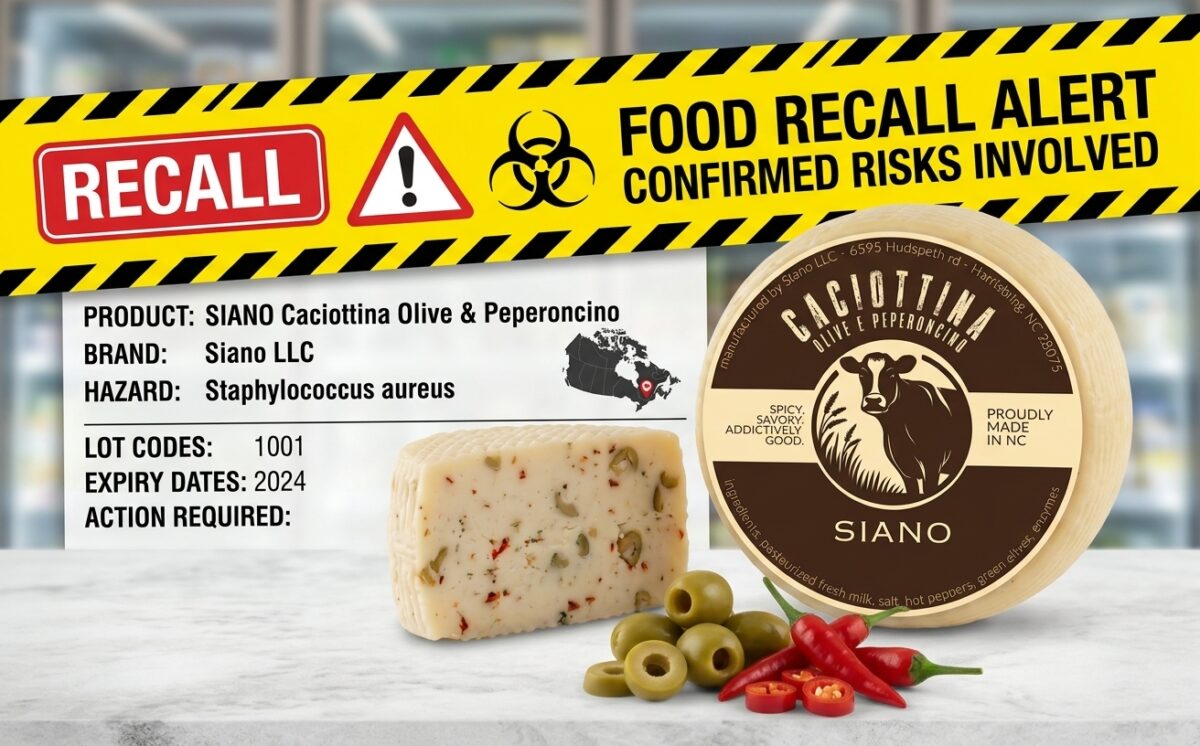
Health Canada and the Canadian Food Inspection Agency have flagged a specific lot of Yotvata brand Caciotta Peperoncino Cheese after testing turned up Staphylococcus aureus, a bacterium capable of producing toxins that trigger food poisoning. The recall, issued by Altra Foods Inc., covers a single 250 g package sold in Ontario and Quebec, and consumers who have it in their fridge are being told not to eat it.
Read Also
The affected product carries UPC 8 00395 0003017, lot code LUG 26, with a best before date of 31-05-2027. It was distributed at the retail level, meaning it could still be sitting on store shelves or in home refrigerators in either province.
What Products Are Being Recalled?
The recall applies to Yotvata brand Caciotta Peperoncino Cheese sold in 250 g packages. The specific lot in question is identified by the code LUG 26 and a best before date of May 31, 2027. Consumers should check both the UPC and the lot code printed on the package before deciding whether the product they have at home is part of the recall.
Why Was This Recall Issued?
The recall was triggered by the detection of Staphylococcus aureus in the cheese. This bacterium is commonly found on skin and in the environment, but when it contaminates food, certain strains can produce toxins that are not destroyed by cooking or refrigeration. Symptoms of Staphylococcus aureus food poisoning typically include nausea, vomiting, stomach cramps and diarrhea, and they can appear within just a few hours of eating contaminated food.
Advertisement
Read Also
While most healthy adults recover without medical treatment, the illness can be more serious for young children, older adults, pregnant women and people with weakened immune systems. Health Canada notes that no illnesses had been reported in connection with this specific recall at the time of publication, though the agency continues to monitor the situation.
Who Is Affected?
The recall notice lists Ontario and Quebec as the distribution area, and the audience is described as retail, meaning grocery stores, delis and specialty food shops in those provinces may have sold the product. Anyone in these regions who purchased Yotvata Caciotta Peperoncino Cheese in recent weeks should check their packaging against the details in the recall notice.
What Should You Do?
Health Canada’s guidance is straightforward: do not use, sell, serve or distribute the recalled cheese. If you have purchased the 250 g Yotvata Caciotta Peperoncino Cheese with lot code LUG 26 and the May 31, 2027 best before date, throw it away or return it to the store where it was purchased.
- Check your fridge for the 250 g Yotvata Caciotta Peperoncino Cheese
- Confirm the UPC 8 00395 0003017 and lot code LUG 26 on the package
- Discard the product or return it to the point of purchase
- Do not serve the cheese to family, guests or customers
- Watch for symptoms such as nausea, vomiting or stomach cramps if the product was already consumed
Anyone who has eaten the recalled cheese and is experiencing symptoms is encouraged to contact a healthcare provider. Consumers can also verify the latest status of the recall or file a report directly with the Canadian Food Inspection Agency.
Official Statement
The recall was published by the Canadian Food Inspection Agency as a Class 2 recall, a designation used when a situation exists in which the use of, or exposure to, a product may cause temporary or medically reversible adverse health consequences. The recalling firm, Altra Foods Inc., is working with the CFIA on the recall, which was first issued on September 16, 2026 and last updated on September 18, 2026.
Members of the public with questions can reach the CFIA’s public enquiries line at 1-613-773-2342 or by email at information@inspection.gc.ca. Media can contact the agency’s media relations team at 613-773-6600 or cfia.media.acia@inspection.gc.ca. The CFIA continues to conduct a food safety investigation, which may lead to the recall of other products if the assessment identifies additional concerns.
Official Source: View original notice on Health Canada →
Advertisement