Health Canada Warns of Bulging RAPICIDE PA Disinfectant Bottles 2026
 Linda H.
Advertisement
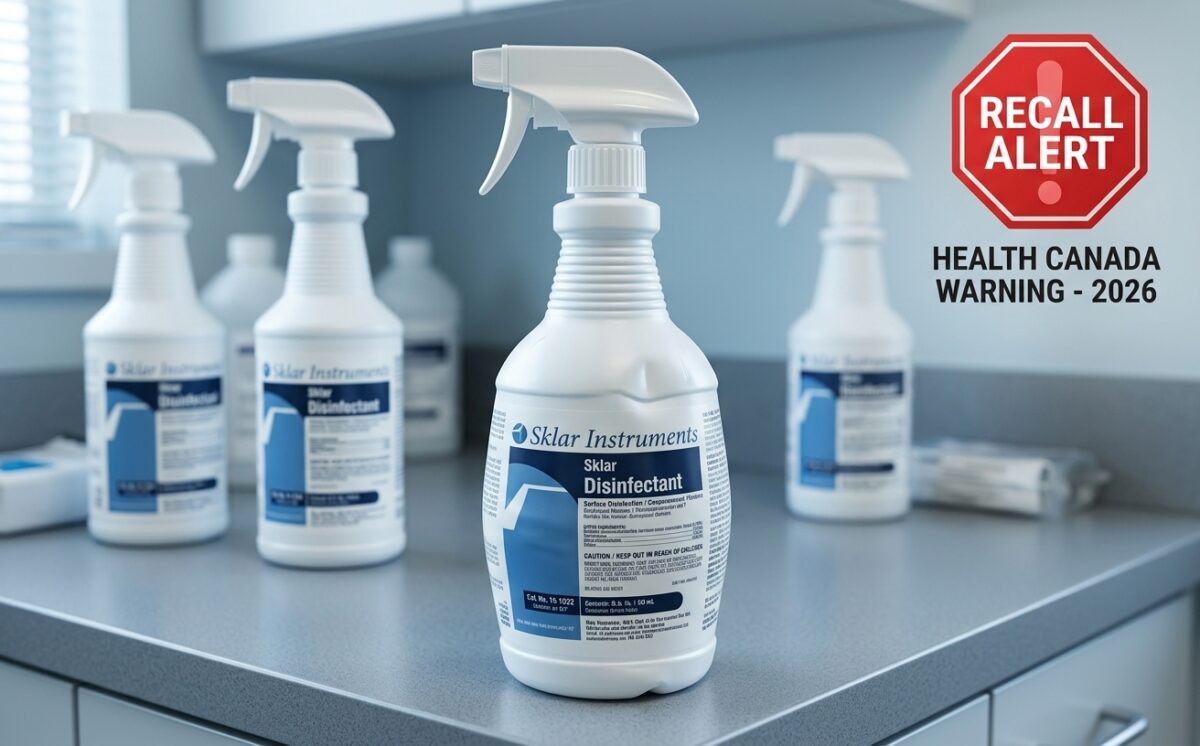
Health Canada has issued a Type II medical device recall for RAPICIDE™ PA High Level Disinfectant after manufacturer STERIS identified that Part A bottles from certain lots may bulge or swell over time, raising the risk of chemical exposure to healthcare workers who handle the product.
Read Also
The recall, published on September 17, 2026 and carrying identification number RA-82643, affects six specific lots of the disinfectant distributed by Medivators Inc., a STERIS subsidiary based in Minneapolis, Minnesota. The product is used in hospitals and clinics as part of high-level disinfection processes for medical instruments.
What Products Are Being Recalled?
The recall applies to RAPICIDE™ PA High Level Disinfectant under model or catalogue number ML02-0116. The affected lot numbers are 689982, 690994, 689172, 692571, 691740 and 694358. Healthcare facilities that have received notification letters should check their inventory against this list.
What Triggered the Recall?
According to STERIS, the issue surfaced through customer complaints reporting that a small number of Part A bottles began to bulge or expand while in storage. Part A is the active chemistry component that generates peracetic acid, the compound responsible for the product’s disinfecting power, and it can off-gas naturally over the course of its shelf life.
Advertisement
Read Also
Under normal conditions, the bottle cap includes a built-in vent designed to release this gas gradually, preventing pressure buildup. The problem arises when that vent becomes blocked. Gas then accumulates inside the sealed bottle, causing internal pressure to rise and the container to swell. STERIS noted that in some cases, when a swollen bottle’s cap is twisted open, excess vapor or liquid chemistry can escape suddenly rather than venting slowly.
That sudden release is where the danger lies. If a healthcare worker opens an affected bottle without wearing the required personal protective equipment, they could be exposed to the escaping vapor or liquid, which may cause injury not only to the person opening the bottle but to others working nearby.
Who Is Affected?
The recall is directed at healthcare facilities and personnel across Canada who received the affected lots through Medivators Inc. distribution channels. Because RAPICIDE products are used almost exclusively in professional medical settings rather than sold to consumers, the notice is aimed squarely at hospital sterile-processing departments, clinics and other institutions that purchase high-level disinfectants for instrument reprocessing.
What Should You Do?
STERIS is sending a customer notification letter directly to every consignee that purchased the affected lots. Facilities that receive this letter are asked to follow the outlined procedures for safely identifying and handling any bottles showing signs of swelling, and to ensure staff use appropriate PPE when opening any Part A container from the listed lots.
Importantly, Health Canada and STERIS note that the underlying chemistry remains safe and effective for its intended disinfecting purpose when used according to labeling. The concern is limited to the physical bottle integrity issue, not the product’s disinfecting performance. Any bottles that must be disposed of due to swelling will be replaced by the manufacturer at no cost.
Healthcare staff who are unsure whether their supply includes an affected lot should contact the manufacturer directly for confirmation and further guidance before handling any bottles that appear swollen or pressurized.
Official Statement
In its notice to Health Canada, STERIS stated that it identified the bulging issue through customer complaints and that a blocked vent cap can allow gas to accumulate, increasing internal pressure and the risk of vapor or liquid escaping when the bottle is opened. The company said replacement product will be provided for any disposed units, and that consignees will be guided on the proper procedures and PPE needed to manage affected bottles safely.
This is a Type II recall, meaning the use of or exposure to the affected product may cause temporary or medically reversible adverse health consequences, with the probability of serious harm considered remote.
Official Source: View original notice on Health Canada →
Advertisement