4,600 Hayward Pool Heaters Recalled Over Carbon Monoxide Risk 2026
 Linda H.
Advertisement
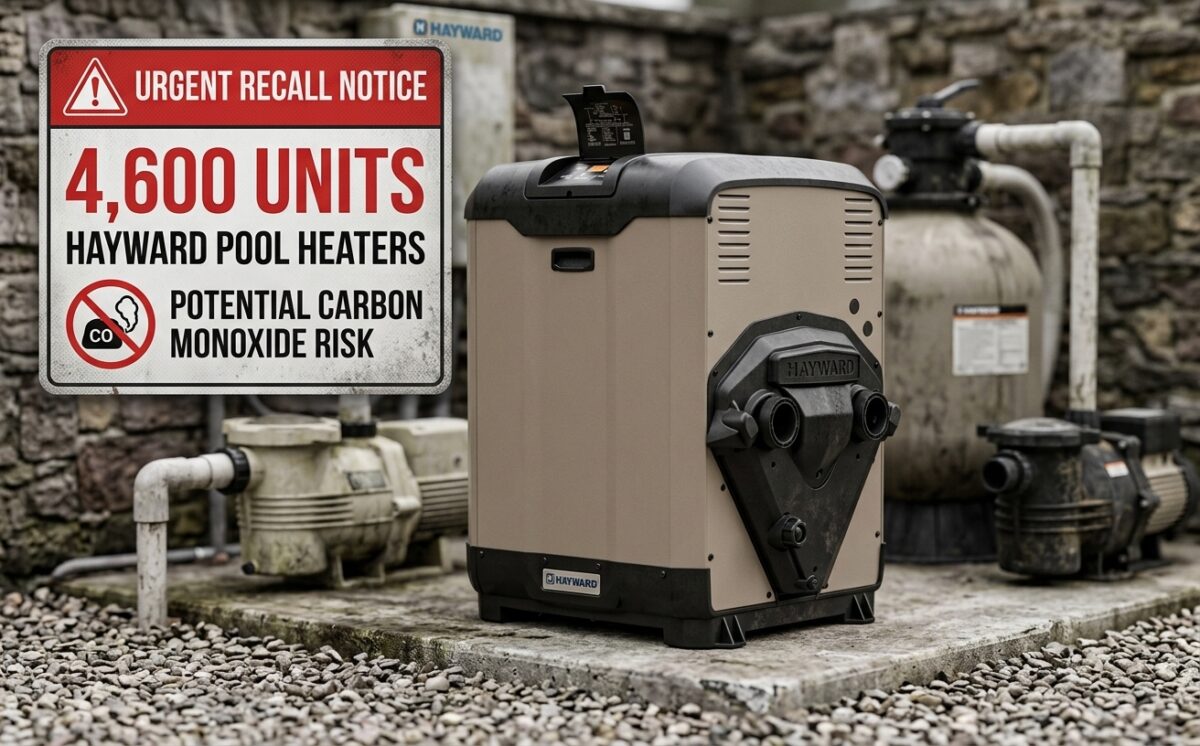
Breathing in carbon monoxide from a malfunctioning appliance can cause dizziness, unconsciousness or death within minutes, and federal regulators say a specific line of residential pool heaters carries exactly that danger. Hayward Industries, Inc. has recalled about 4,600 of its Universal-HC Series pool heaters after determining the units can emit dangerously high levels of carbon monoxide (CO) during normal operation.
Read Also
The recall, announced September 17, 2026, in cooperation with the U.S. Consumer Product Safety Commission (CPSC), covers 400,000 BTU dual-fuel gas pool heaters. No injuries or incidents have been reported so far, but the CPSC and the manufacturer are urging owners not to wait for a warning sign before acting, since carbon monoxide is colorless, odorless and can overwhelm a person before they even realize something is wrong.
Which Items Are Involved?
The recalled product is the Hayward-branded HDFS400 ‘Universal-HC Series’ pool heater. These are dual-fuel gas units that measure 21 inches long, 28 inches wide and 31 inches high, with a brown body and a black top section. Each heater has a digital display control panel on top and a molded base with built-in tie-down connections.
Consumers can identify their unit by checking the name plate located just below the vent. The word ‘Hayward’ appears at the bottom of the plate, while the model number ‘HDFS400’ is printed at the top. The heaters were manufactured in the United States and sold through pool equipment distributors, builders and service professionals nationwide from March 2026 through July 2026, for roughly $5,600 apiece.
Advertisement
Read Also
What Went Wrong?
According to the CPSC, the heaters can produce elevated levels of carbon monoxide while running, creating a serious poisoning hazard for anyone nearby, particularly in enclosed or poorly ventilated pool equipment areas. Carbon monoxide poisoning can cause headaches, nausea, confusion, loss of consciousness and, in severe cases, death. Because the gas has no smell or color, homeowners and pool technicians have no way of detecting the problem without proper equipment or an inspection.
The recall has been classified by the CPSC as a Fast Track Recall, a designation used when a company reports a defect and works with the agency to issue a corrective action quickly, generally without the CPSC making a formal hazard determination first.
Who Should Be Concerned
The affected heaters were sold to pool equipment distributors, builders and service professionals across the country, meaning both commercial installers and residential pool owners who had one of these units installed between March and July 2026 could be impacted. Anyone unsure whether their heater is part of the recalled batch should check the name plate details described above or contact Hayward directly for confirmation.
What Consumers Need to Do Now
Consumers should stop using the recalled pool heater immediately. Continuing to operate the unit, even briefly, keeps the carbon monoxide risk active.
- Turn off and stop using the HDFS400 Universal-HC Series pool heater right away.
- Contact Hayward Industries toll-free at 855-500-5288, available 8 a.m. to 5 p.m. ET, Monday through Friday.
- Alternatively, email HeaterInquiry@Hayward.com or visit hayward.com/productrecall for more information.
- Schedule a free in-home inspection and repair performed by a qualified technician arranged through Hayward.
- Do not attempt to repair or inspect the unit yourself.
From the Agency
The CPSC notes that no injuries or incidents linked to this hazard have been reported to date, which officials say reflects the value of catching the defect and issuing a recall before harm occurs. The agency reminds the public that federal law bars anyone from reselling a product once it has been recalled, whether the recall is government-ordered or undertaken voluntarily in consultation with the CPSC. Consumers who suspect a product-related injury can report it through SaferProducts.gov, and the CPSC’s consumer hotline remains available at 800-638-2772 for additional guidance.
Official Source: View original notice on CPSC →
Advertisement