Studio Six Headphone Amplifiers Recalled for Electrocution Risk: CPSC
 Linda H.
Advertisement
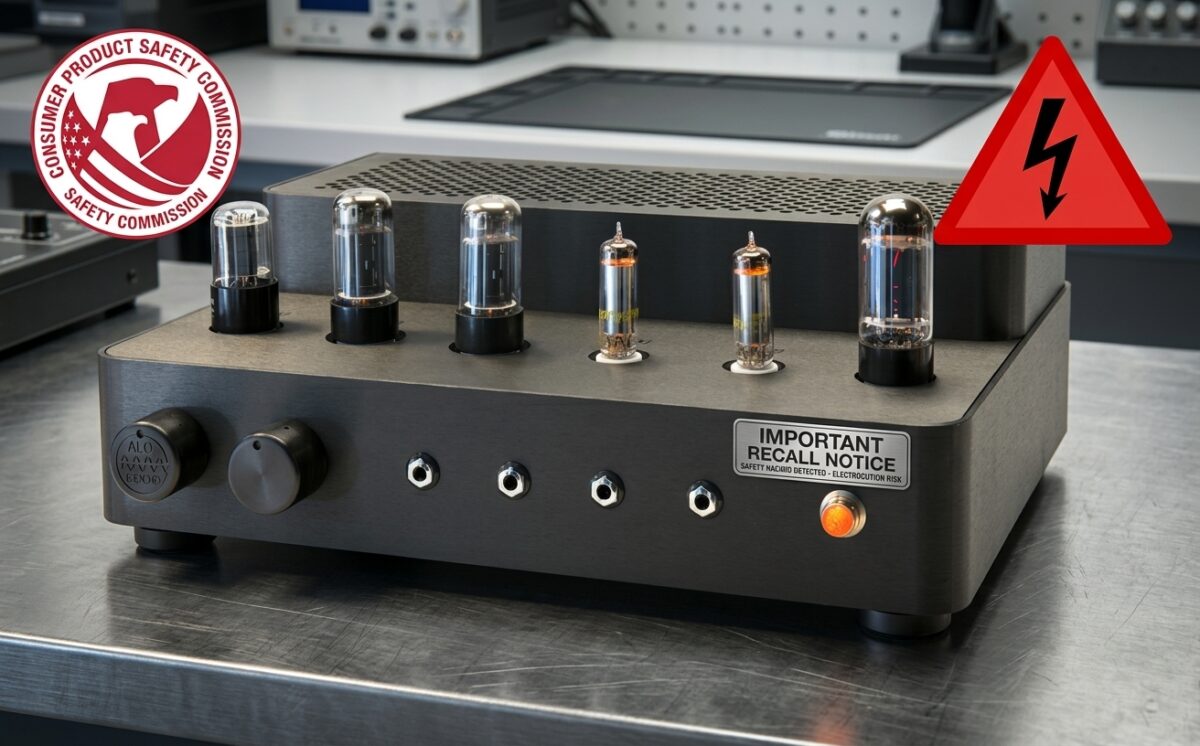
An electrical hazard hiding inside a high-end audio component has prompted a recall of Studio Six Headphone Amplifiers. According to the U.S. Consumer Product Safety Commission, when these amplifiers are used with aftermarket metal base vacuum tubes instead of the tubes originally supplied, exposed metal on the unit can become electrified. That defect creates a serious risk of electrocution, which CPSC says could result in serious injury or death to anyone who touches the affected area.
Read Also
The recall was announced August 27, 2026, and covers about 90 units sold in the United States. It was distributed by AudioLineOut LLC, based in Portland, Oregon, and manufactured domestically. No injuries or incidents have been reported so far, but the severity of the possible outcome is why CPSC and the company moved to act before anyone gets hurt.
What Products Are Being Recalled?
The recall involves Studio Six Headphone Amplifiers, model ST6, sold in both black and silver finishes. The units are sizable pieces of home audio gear, measuring 15-3/4 inches high by 12 inches wide, with the lower section standing 5-3/4 inches and the upper section reaching 20-3/4 inches from top to bottom.
- Four headphone audio connectors on the front of the unit
- Three sets of left-and-right RCA inputs on the back
- A rear connector for an auxiliary power device
- Available in black or silver
The amplifiers were sold at independent stereo stores nationwide and online through aloaudio.com from December 2014 through December 2022, at a price point of roughly $3,900 each.
Advertisement
Read Also
Why Was This Recall Issued?
The core problem is not with the amplifier as originally sold, but with what happens when owners swap in aftermarket metal base vacuum tubes in place of the tubes AudioLineOut originally included. Under that condition, bare metal on the unit can become energized. Anyone who comes into contact with the electrified metal risks a serious electric shock, and CPSC has classified the potential outcome as death or serious injury, placing this among the more severe hazard categories the agency tracks.
This recall was processed through CPSC’s Fast Track Recall program, which allows companies to work directly with the agency to get corrective action underway quickly once a hazard is identified.
Who Should Be Concerned
Anyone who purchased a Studio Six Headphone Amplifier from an independent stereo retailer or through aloaudio.com between December 2014 and December 2022 should check whether they currently have aftermarket metal base tubes installed in the unit. Because the amplifier was a specialty, higher-end product with a limited production run of about 90 units, the affected population is small, but the consequences of the hazard are significant enough that every owner should take the warning seriously.
What Consumers Need to Do Now
Owners should stop using the amplifier right away if it currently has aftermarket metal base tubes installed. AudioLineOut is offering a free repair to resolve the hazard.
- Stop using the amplifier immediately if aftermarket metal base tubes are installed
- Contact AudioLineOut at support@aloaudio.com to request a prepaid shipping label and send the unit in for a free repair
- Call AudioLineOut at 971-279-4357, 8 a.m. to 5 p.m. PT, Monday through Friday
- Visit aloaudio.com and select ‘Safety Notice,’ or go directly to the Studio Six safety recall page to fill out a contact form
- As an alternative to sending the unit in, consumers can simply reinstall the originally supplied vacuum tubes to avoid the hazard
From the Agency
CPSC’s recall notice states plainly that when the amplifiers are used with aftermarket metal base tubes, the bare metal can become electrified, posing a risk of serious injury or death from electrocution. The agency reiterated that federal law bars the sale of any product subject to a recall, whether ordered by the Commission or undertaken voluntarily in cooperation with CPSC, underscoring why AudioLineOut moved to offer repairs rather than let affected units remain in circulation.
Consumers who are unsure whether their unit has been fitted with aftermarket tubes are encouraged to reach out to AudioLineOut directly rather than assume the product is safe to keep using.
Official Source: View original notice on CPSC →
Advertisement