Viral Reactivation Risk Prompts Health Canada Alert on TZIELD 2026
 Linda H.
Advertisement
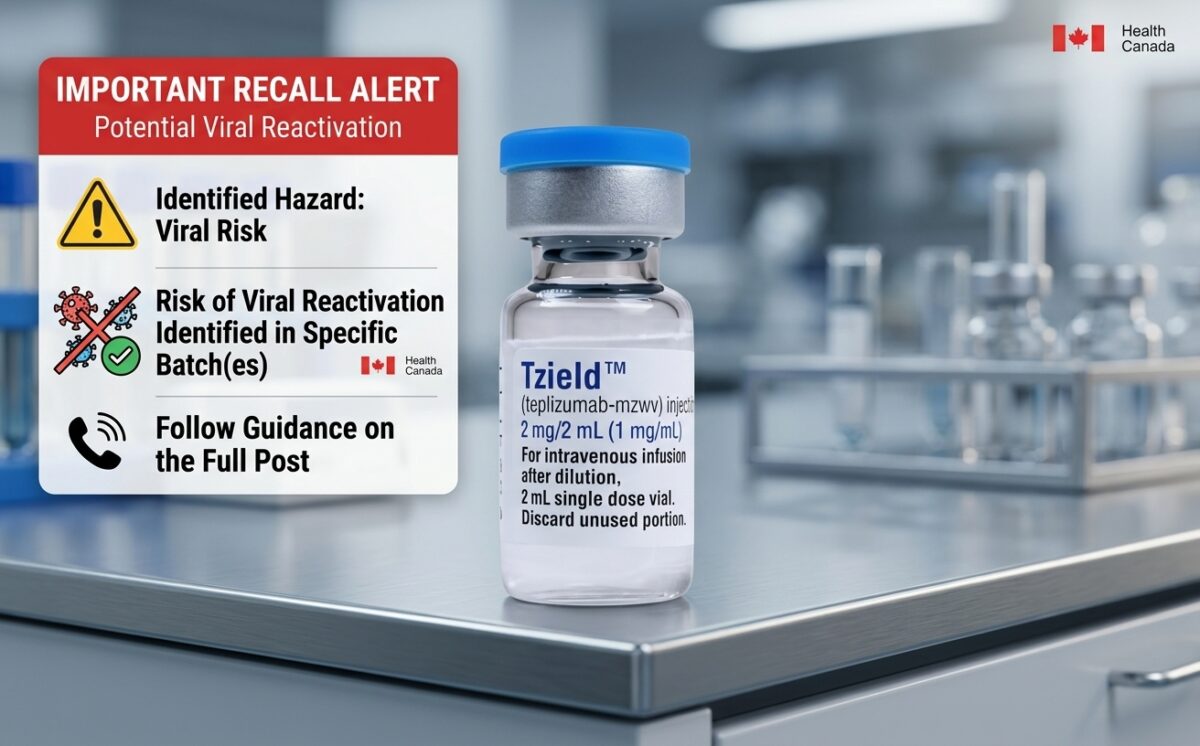
Health Canada has issued a health professional risk communication warning that TZIELD (teplizumab), a drug used to delay the onset of Stage 3 type 1 diabetes, has been linked to serious and life-threatening cases of viral reactivation. The alert, published on September 14, 2026, centers on reports of reactivated Epstein-Barr virus (EBV) and cytomegalovirus (CMV) in patients who received the treatment.
Read Also
The communication was issued jointly with sanofi-aventis Canada Inc., the drug’s manufacturer, after post-market reports showed that immunocompromised patients face a heightened risk. As a result of these findings, TZIELD is now contraindicated for anyone with an active viral infection, including EBV or CMV, any other active serious infection, or a compromised immune system.
Which Items Are Involved?
The safety alert applies specifically to TZIELD, teplizumab for injection, supplied at 2 mg per 2 mL (1 mg/mL) for intravenous infusion. TZIELD is a CD3-directed monoclonal antibody approved for adult and pediatric patients aged 8 years and older who have Stage 2 type 1 diabetes, and is intended to delay progression to Stage 3, the point at which the body can no longer produce sufficient insulin on its own.
What Triggered the Recall
TZIELD works by slowing the autoimmune response responsible for type 1 diabetes, but because it is an immunomodulatory agent, it also affects lymphocyte populations. That immune-system effect appears to be behind the newly reported cases. According to Health Canada, most instances of viral reactivation occurred within two months of a patient’s last infusion, and some happened in patients who continued treatment despite persistent, severe lymphopenia.
Advertisement
Read Also
The agency also flagged the possibility of EBV-associated lymphoproliferative disorder in patients who were on concomitant immunosuppressive therapy or who had underlying conditions affecting immune function. In response, the Canadian Product Monograph for TZIELD has been updated to include this new safety information.
Who Should Be Concerned
The alert is directed primarily at healthcare professionals, including pediatric and adult endocrinologists, diabetologists, internal medicine practitioners, infectious-disease specialists, pediatricians, general practitioners, nurse practitioners, and hospital or community pharmacists, as well as diabetic centre nurses. Distribution of the communication is national.
Patients and caregivers should also take note, since EBV and CMV are extremely common viruses that can lie dormant in the body long after an initial infection. TZIELD’s effect on the immune system can cause these viruses to reactivate, and in people with weakened immunity, the resulting illness can become serious or even life-threatening.
Steps Consumers Should Take
- Contact a healthcare professional right away if symptoms such as fever, swollen glands, or fatigue develop during or after TZIELD treatment.
- Do not stop TZIELD treatment without first consulting a healthcare professional.
- Raise any questions or concerns about this safety update directly with a treating physician.
- Healthcare professionals should evaluate patients for active EBV and CMV infection, including confirmation of an undetectable viral load, before starting treatment.
- Patients should be monitored for infection symptoms during treatment and for at least two months after the final infusion, with lymphocyte counts tracked throughout.
Health Canada notes that if EBV or CMV infection is suspected, TZIELD treatment should be paused while diagnostic testing, including viral load verification, is completed. Confirmed infection requires permanent discontinuation of the drug along with appropriate treatment. The drug should likewise be permanently stopped if a patient develops prolonged severe lymphopenia or any serious infection.
From the Agency
‘Original signed by Maneesh Puri, Country Medical Head, Autoimmune T1D, sanofi-aventis Canada Inc.,’ appears on the official notice, which was distributed alongside Health Canada’s own communication. Health Canada says it is sharing this information with healthcare professionals and the public through its Recalls and Safety Alerts Database, with further distribution planned through the MedEffect e-Notice email system.
Anyone experiencing viral reactivation or other serious or unexpected side effects while taking TZIELD is encouraged to report the reaction to sanofi-aventis Canada Inc. or to Health Canada’s MedEffect Canada adverse reaction reporting program. The identification number for this communication is RA-82620.
Official Source: View original notice on Health Canada →
Advertisement