950 Lbs of Berlin Seeds Alfalfa Sprouting Seed Recalled Over STEC 2026
 Linda H.
Advertisement
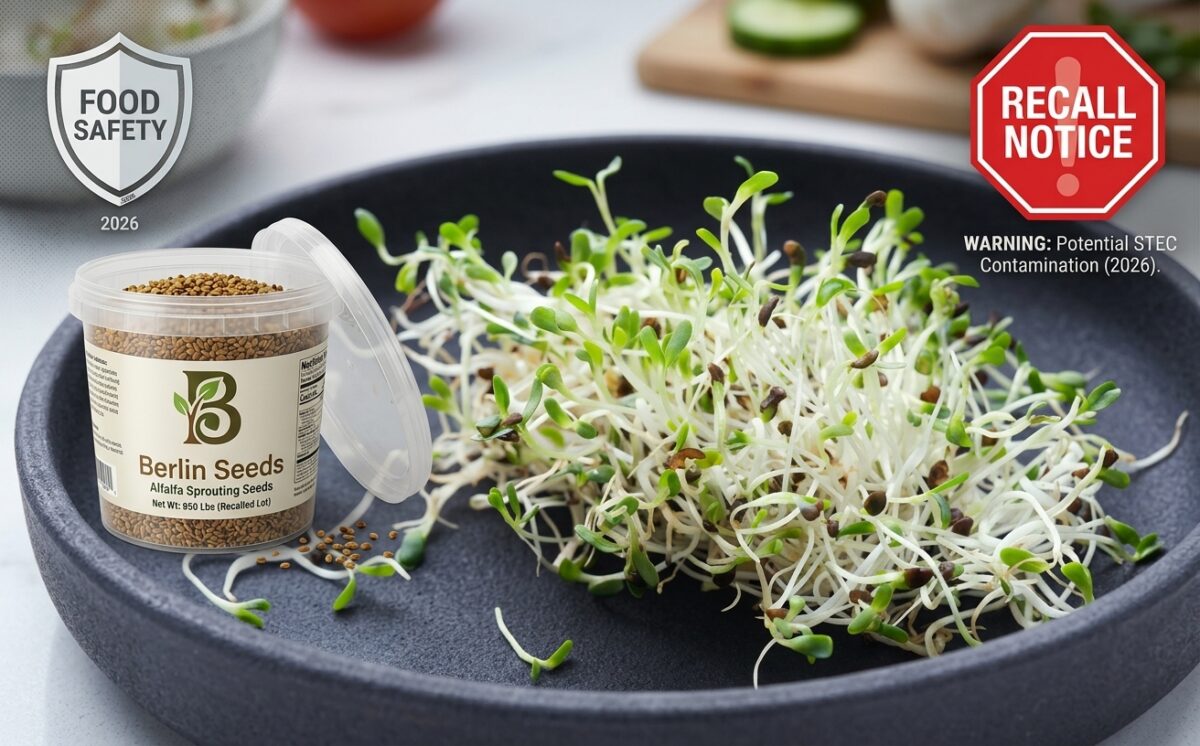
Nearly a thousand pounds of alfalfa sprouting seed sold across 44 states is now under recall. Berlin Seeds of Millersburg, Ohio, is recalling 950 lbs of its Alfalfa Sprouting Seed because it may be contaminated with Shiga toxin-producing Escherichia coli (STEC) and/or Salmonella. The company announcement was posted by the U.S. Food and Drug Administration on September 23, 2026.
Read Also
The seed was sold from February 13, 2026 through August 23, 2026, both at the Berlin Seeds retail store in Millersburg and through the company website. One illness has been reported directly to the company in connection with this seed. If you grow your own sprouts at home, this is worth checking today.
Quick Facts
- Company: Berlin Seeds, Millersburg, OH
- Product: Alfalfa Sprouting Seed
- Amount recalled: 950 lbs
- Lot code: SAL2-24JB (5 lb. and 50 lb. packages only)
- Sale period: February 13, 2026 to August 23, 2026
- Possible contaminants: STEC and/or Salmonella
- Reported illnesses to the company: One
Products Affected by This Recall
The recall covers Berlin Seeds branded Alfalfa Sprouting Seed sold under the Berlin Seeds label in 1/4 lb., 1/2 lb., 1 lb., 5 lb., and 50 lb. sizes. The four smaller sizes come in resealable bags, while the 50 lb. size is packed in a non-resealable poly woven bag.
Only the 5 lb. and 50 lb. packages carry a lot code, which is SAL2-24JB and is printed on the bottom right-hand corner of the label. The 1/4 lb., 1/2 lb., and 1 lb. packages have no lot code, so shoppers with those sizes should rely on the product name and purchase date instead. The company says no other Berlin Seeds sprouting seeds, including other alfalfa sprouting seed, are affected.
Advertisement
Read Also
What Triggered the Recall
The recall began after Berlin Seeds heard from its seed supplier. According to the company, traceback showed that the seed was used by a sprout grower whose finished sprouts were part of an FDA investigation into a multistate foodborne illness outbreak. That outbreak involved multiple strains of Shiga toxin-producing E. coli (serotypes O26:H11, O103:H25, and O168:H8) and Salmonella Agona infections.
The supplier also reported that a spent irrigation water sample from one of its alfalfa seed lots tested positive for E. coli. Together, those findings led Berlin Seeds to pull the affected seed from the market.
Why These Bacteria Are a Concern
STEC can cause serious and sometimes fatal infections, particularly in young children, older adults, and people with weakened immune systems. Symptoms usually start within a few days of ingestion and include acute diarrhea, often bloody. Most people recover within a week. However, some people, especially children under 5, the elderly, and the immunocompromised, may develop hemolytic uremic syndrome (HUS), a severe condition marked by red cell breakdown, low platelet counts, and kidney failure. HUS can lead to death.
Nontyphoidal Salmonella most commonly causes gastroenteritis, with nausea, vomiting, and abdominal cramps that typically begin 6 to 72 hours after exposure. In healthy people the illness is usually self-limited. Neonates, infants, adults over 65, and people with impaired immunity face a higher risk of severe illness. In rare cases the bacteria can reach the bloodstream and cause infected aneurysms, endocarditis, or septic arthritis.
Where Were These Products Sold?
Berlin Seeds shipped the seed to customers in 44 states: AK, AL, AR, AZ, CA, CO, CT, DE, FL, IA, ID, IL, IN, KS, KY, MA, MD, ME, MI, MN, MO, MS, MT, NC, ND, NE, NH, NM, NY, OH, OK, OR, PA, SC, SD, TN, TX, UT, VA, VT, WA, WI, WV, and WY.
Retailers and distributors that received the seed are also covered by the recall. Home sprouters, small growers, and anyone who bought seed in bulk should check their supplies.
What Consumers Need to Do Now
- Stop using the recalled seed immediately. Do not sprout it, plant it, or give it away.
- Do not eat any sprouts already grown from this seed. Throw them away.
- Dispose of the seed in the trash in a sealed bag.
- Carefully clean and sanitize any jars, trays, sprouters, or surfaces the seed or sprouts may have touched.
- If you ate the recalled product and feel ill, contact your health care provider.
Retailers and distributors should immediately stop selling and distributing the seed and dispose of it according to local protocols. They should also clean and sanitize any surfaces or containers the product touched.
What the Company Said
Berlin Seeds says customers with questions, or those who want to arrange a replacement, can call 877-464-0892, Monday through Friday, 8:00 a.m. to 4:00 p.m. EST. Questions can also be sent to order@berlinseeds.life, and email inquiries will be answered during the same hours. The company states that the recall is being conducted with the knowledge of the FDA.
The FDA publishes company recall announcements as a public service and does not endorse the product or the company. Anyone who suspects a problem with an FDA-regulated product can report it through the agency’s Report a Product Problem page.
Official Source: View original notice on FDA →
Advertisement