Zinc Oxide Particulate Risk Triggers B. Braun Saline Recall 2026
 Linda H.
Advertisement
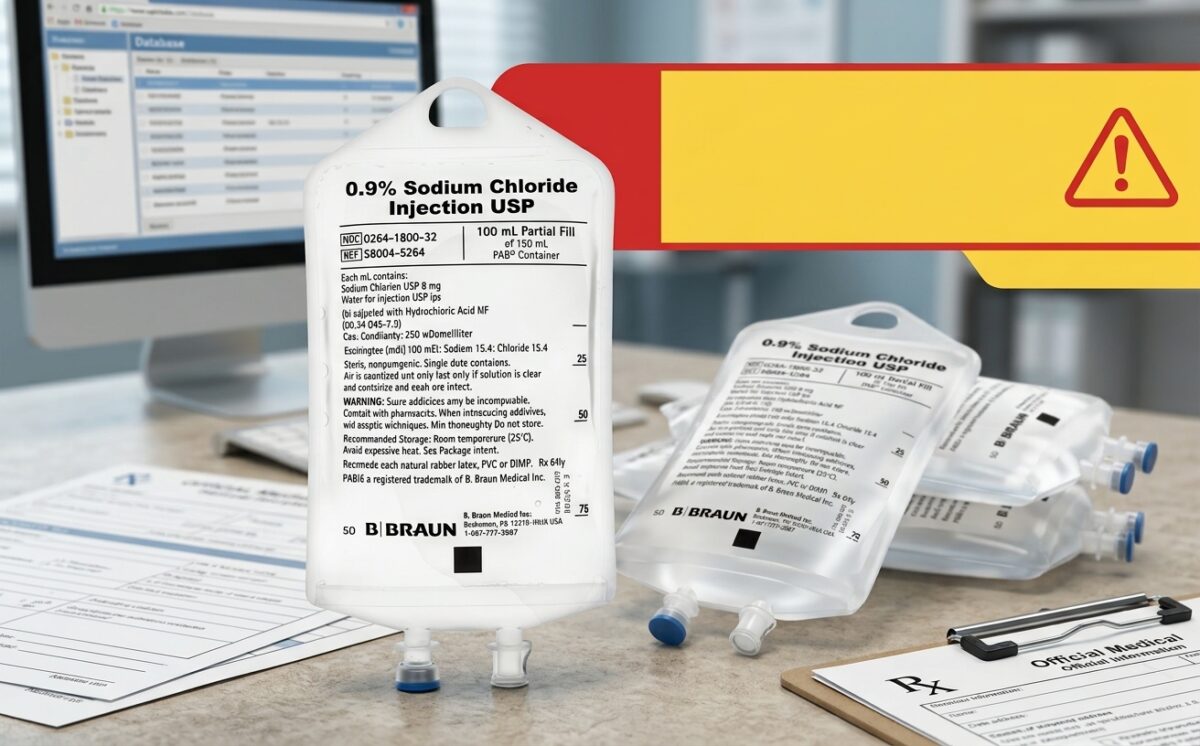
A hospital-grade saline solution used to hydrate patients and deliver intravenous medications has been pulled from healthcare facilities nationwide after tests found visible foreign particles inside the sealed containers. B. Braun Medical Inc., based in Bethlehem, Pennsylvania, announced a voluntary recall of three lots of its 0.9% Sodium Chloride Injection USP, 100 mL, packaged in a 150 mL PAB container, after the particulate matter was identified as zinc oxide.
Read Also
The product is a staple of hospital care, used both as a source of electrolytes and hydration and as a diluent for administering other intravenous drugs. Because it is infused directly into the bloodstream, any contamination carries outsized risk compared to an oral medication, which is why B. Braun moved quickly to notify distributors and customers once the issue was identified.
What Products Are Being Recalled?
The recall covers B. Braun 0.9% Sodium Chloride Injection USP, 100 mL, sold under product catalog number S8004-5264 and NDC number 0264-1800-32. Three specific lots are affected: J6B435, J6B444, and J6B457, all carrying an expiration date of April 30, 2027. The recalled product was distributed nationwide to hospitals and healthcare facilities between February 27, 2026, and August 3, 2026.
Why Was This Recall Issued?
B. Braun identified particulate matter within the affected lots and determined it to be zinc oxide. The company’s risk statement is stark: administering saline contaminated with particulate matter carries a ‘reasonable probability of causing life-threatening adverse health consequences.’ Those consequences include pulmonary emboli, or blockages in the blood vessels of the lungs, along with occlusions in other blood vessels that can lead to tissue death and organ damage.
Advertisement
Read Also
The risk does not stop there. Phlebitis, an inflammation of vein walls that can trigger clotting, is another possible outcome. On a systemic level, foreign particles introduced through an IV line can activate the body’s immune response, disrupt organ function, and cause hemolysis, the breakdown of red blood cells. As of the announcement, B. Braun says it has not received any reports of serious injury, death, or other adverse events tied to the contaminated lots.
Who Should Be Concerned
Because this product is distributed to the ‘hospital/healthcare facility/user level’ rather than sold directly to consumers in stores, the recall primarily affects hospitals, clinics, and other medical providers that received shipments during the six-month distribution window. Patients who received IV fluids or medications diluted with this saline product at an affected facility could potentially have been exposed, though no confirmed harm has been reported so far.
Steps Consumers Should Take
Healthcare facilities and hospitals holding any of the three recalled lots should stop using the product immediately and return it to the place of purchase. B. Braun states it is notifying its distributors and customers directly by mail and is arranging for the return and replacement of all recalled inventory.
Patients or caregivers with questions about the recall can reach B. Braun by emailing recalls@bbraunusa.com, Monday through Friday from 8:00 a.m. to 5:00 p.m. Eastern time. Anyone who suspects they experienced a health problem connected to this product is urged to contact their physician or healthcare provider right away.
Adverse events or quality issues linked to the product can also be reported to the FDA’s MedWatch program, either online at the agency’s MedWatch reporting page, by downloading a reporting form and submitting it by mail, or by fax to 1-800-FDA-0178. Reporting forms can also be requested by calling 1-800-332-1088.
What the Company Said
In its announcement, B. Braun confirmed the recall is being carried out ‘with the knowledge of the U.S. Food and Drug Administration.’ The company’s media contact for the recall is Allison Longenhagen, who can be reached at allison.longenhagen@bbraunusa.com. The FDA posted the company’s announcement as a public service and notes that it does not endorse either the product or the company involved.
This recall serves as a reminder of how closely intravenous products are monitored even after they leave the manufacturing line, and why hospitals are urged to check lot numbers against recall notices before administering any IV fluids to patients.
Official Source: View original notice on FDA →
Advertisement