1,043 Insulin Pen and Cartridge Units Recalled by Sanofi-Aventis in 2026
 Linda H.
Advertisement
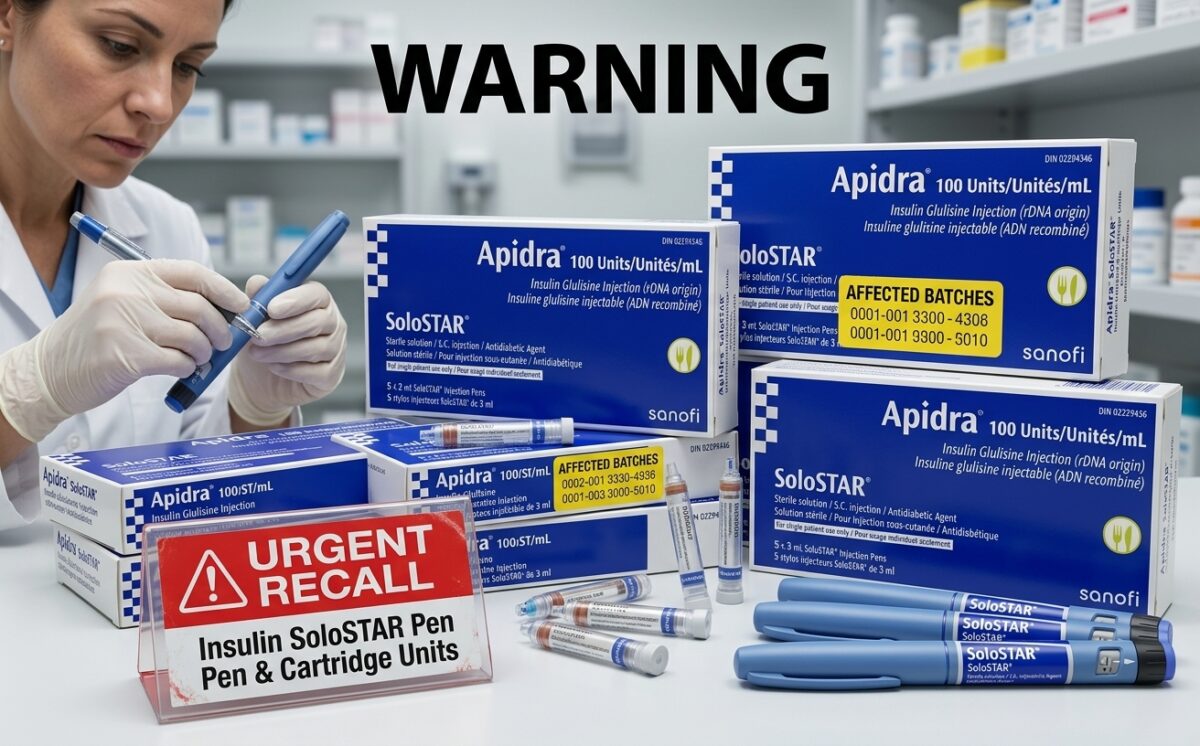
Sanofi-Aventis Canada Inc. has recalled 1,043 units of insulin pens and cartridges after discovering that select lots may have been frozen during shipping earlier this year. The affected stock reached roughly 80 pharmacies, clinics and hospitals across the country, and Health Canada has classified the action as a Type I recall, its most serious category.
Read Also
If you rely on insulin from Sanofi-Aventis, this is worth checking closely. Freezing can quietly reduce how well insulin works, and using a compromised pen or cartridge without realizing it could leave your blood sugar dangerously out of control.
Products Affected by This Recall
The recall spans several well-known Sanofi insulin brands, though only specific lot numbers are involved, not entire product lines. Affected products include:
- Admelog 100 IU/mL, box of 5 cartridges (DIN 02469898) – lots 5F044A, 6F007A
- Admelog SoloSTAR 100 IU/mL, box of 5 pens (DIN 02469871) – lots 6F755A, 6F756A, 6F757A
- Apidra SoloSTAR 100 IU/mL, box of 5 pens (DIN 02294346) – lot 6F957A
- Lantus SoloSTAR 100 IU/mL, box of 5 pens (DIN 02294338) – lot 6F0565A
- Toujeo DoubleSTAR 300 IU/mL, sample pen and box of 3 pens (DIN 02493373) – lots 5F037A, 6F055A
- Toujeo SoloSTAR 300 IU/mL, sample pen, box of 3 and box of 5 pens (DIN 02441829) – lots 4F284A, 6F663A, 6F680A
- Trurapi 100 IU/mL, box of 5 cartridges (DIN 02506564) – lots 6F029A, 6F029B
- Trurapi SoloSTAR 100 IU/mL, box of 5 pens (DIN 02506572) – lots 6F387A, 6F403A
The units in question were shipped to pharmacies, clinics and hospitals on July 13, 14 and 15, and again on August 10, 11, 12 and 13, 2026.
Advertisement
Read Also
Why Was This Recall Issued?
According to Health Canada, the affected pens and cartridges may have been exposed to freezing temperatures somewhere along the shipping chain. Insulin that has been frozen can lose potency even if it looks and behaves normally when injected. Sanofi-Aventis has stressed that only a limited number of units within each listed lot are actually involved, not every package bearing those lot numbers. In total, the 1,043 affected units represent less than one percent of everything the company distributed under these lots.
Who Is Affected?
The recall is national in scope, reaching an estimated 80 pharmacies, clinics and hospitals throughout Canada. Sanofi-Aventis has already contacted the specific locations that received the compromised stock. Patients who use insulin to manage diabetes, whether adults or children, are the population most directly affected, since these products are central to controlling blood sugar day to day.
What Should You Do?
Because only some units within each lot are impacted, Health Canada is urging people not to assume their product is affected just because the lot number matches. Consumers should:
- Check whether their product carries one of the listed lot numbers.
- Contact the pharmacy, clinic or hospital where it was obtained to confirm whether their specific unit is one of the recalled ones.
- Stop using the product immediately if it is confirmed affected, or if there is any uncertainty, and return it for replacement and proper disposal.
- Monitor blood sugar more closely if an affected product may have already been used.
- Watch for symptoms of high blood sugar, including frequent urination, excessive thirst, dry mouth, blurred vision, fatigue, fruity-smelling breath, nausea or vomiting, and seek medical attention if these occur.
- Call Sanofi-Aventis Canada toll-free at 1-800-265-7927 with any questions about the recall.
Unopened insulin should always be stored in a refrigerator between 2°C and 8°C and should never be frozen. Storage instructions for opened, in-use insulin vary by product, so patients should refer to their specific package insert.
From the Agency
Health Canada says it is monitoring Sanofi-Aventis Canada’s recall and investigation, including the corrective and preventive steps the company takes, and has committed to informing the public if any new risks come to light. The agency also encourages anyone who experiences a side effect or has a complaint related to a health product to report it directly to Health Canada.
Official Source: View original notice on Health Canada →
Advertisement