Philips MR Systems Recalled Over Software Freeze Issue: Health Canada
 Linda H.
Advertisement
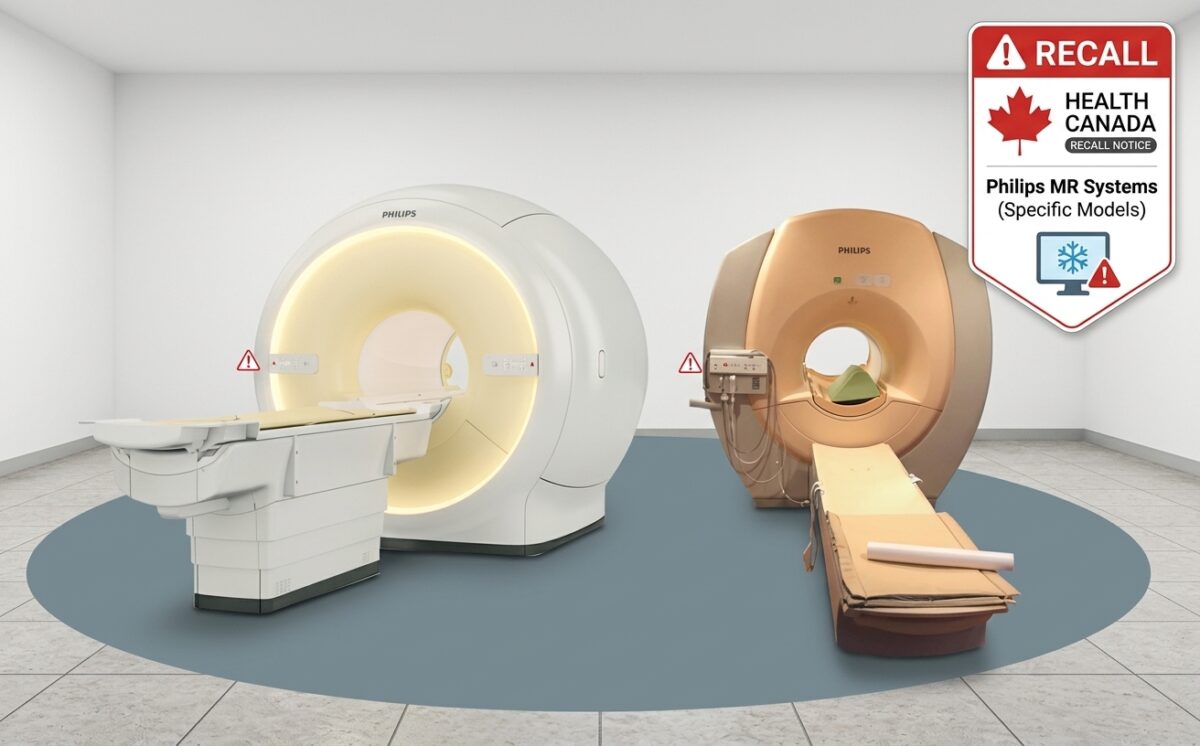
Health Canada has issued a Type II health product recall for a wide range of Philips Ingenia, Achieva and Intera Magnetic Resonance (MR) imaging systems after the manufacturer identified a software defect that can cause the machines to freeze mid-scan. The recall, dated September 1, 2026 and published September 9, 2026, carries the identification number RA-82609 and applies to systems running software versions R5 and R11.
Read Also
According to Health Canada, the issue arises when scan parameters are manually adjusted in a way that pushes image reconstruction requirements beyond the system’s available memory. When that happens, the MR system locks up, halting the image generation process and forcing technologists to restart the entire unit before continuing.
Recalled Products at a Glance
The recall covers a broad lineup of Philips MR systems marketed under Philips Medical Systems Nederland B.V. Affected models and their corresponding catalogue numbers include the Ingenia 1.5T (models 781315 and 1.5T), Ingenia 3.0T CX (781271), Achieva 1.5T and 3.0T MRI Systems – Main Unit, Ingenia Ambition S (782108, 782139), Ingenia 3.0T (3.0T), Ingenia Ambition X (782109, 781356, 782138), Ingenia Elition X (782107, 781358), and the Intera 1.5T MRI System – Main Unit.
Health Canada notes that no lot or serial numbers apply to these listings, meaning the recall is tied to the software version running on the equipment rather than to a specific manufacturing batch.
Advertisement
Read Also
What Went Wrong?
The core problem lies in how the affected software versions handle memory allocation during image reconstruction. If an operator manually changes scan parameters in a manner that demands more processing memory than the system has available, the reconstruction process can stall entirely. Rather than completing the scan or returning an error, the machine freezes, terminating the examination in progress and requiring a full system re-start before imaging can resume.
This kind of interruption is disruptive in any clinical environment, but it carries particular weight in radiology departments where scheduling is tight and patients may need to be repositioned or re-scanned. A frozen system mid-examination can also delay diagnosis in cases where imaging results inform urgent treatment decisions.
Who Should Be Concerned
The recall is directed at the healthcare sector. Hospitals, imaging clinics and diagnostic centres across Canada that operate any of the listed Philips Ingenia, Achieva or Intera MR systems on software versions R5 or R11 fall within the scope of this alert. Patients themselves are not asked to take direct action, as this is an equipment-level software issue managed between Philips and the facilities that own or operate the machines.
Health Canada’s listing identifies Philips Medical Systems Nederland B.V., based in Best, Netherlands, as the responsible company, and classifies the issue under health products, medical devices and radiology.
What Consumers Need to Do Now
Because this recall is aimed at healthcare facilities and technical staff rather than individual consumers, Health Canada’s guidance is straightforward: affected institutions should contact the manufacturer directly if they require additional information about the software issue, mitigation steps, or an update timeline.
Facilities running the affected MR systems on software versions R5 or R11 should be alert to the specific scenario described — manually adjusted scan parameters that exceed available system memory — and follow any technical guidance issued by Philips to avoid mid-examination freezes. Restarting the system is currently described as the immediate workaround when a freeze occurs.
From the Agency
Health Canada’s public notice states plainly that Philips ‘has become aware of a software issue affecting Philips Magnetic Resonance (MR) imaging systems operating with software versions R5 & R11, which may terminate an examination during the image reconstruction process.’ The agency further explains that when reconstruction requirements exceed available system memory, ‘the system will freeze, preventing image generation and requiring a system re-start.’
The recall is formally categorized as a Type II health product recall, and Health Canada has listed the audience for this alert as healthcare professionals. Consumers or facilities seeking more detail are directed to reach out to Philips Medical Systems Nederland B.V. directly, as no separate refund, replacement or public consumer remedy process has been outlined in the notice.
Official Source: View original notice on Health Canada →
Advertisement