Health Canada Issues Type III Recall of Aleve Caplets Over Distribution Error
 Linda H.
Advertisement
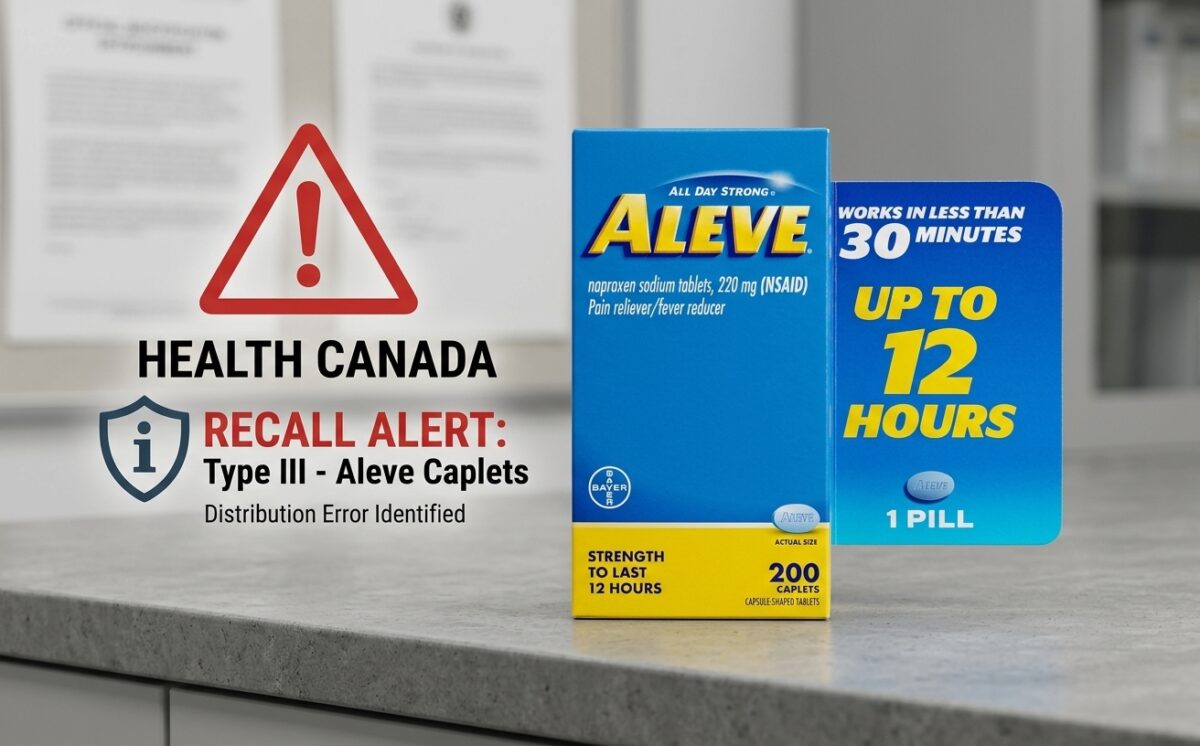
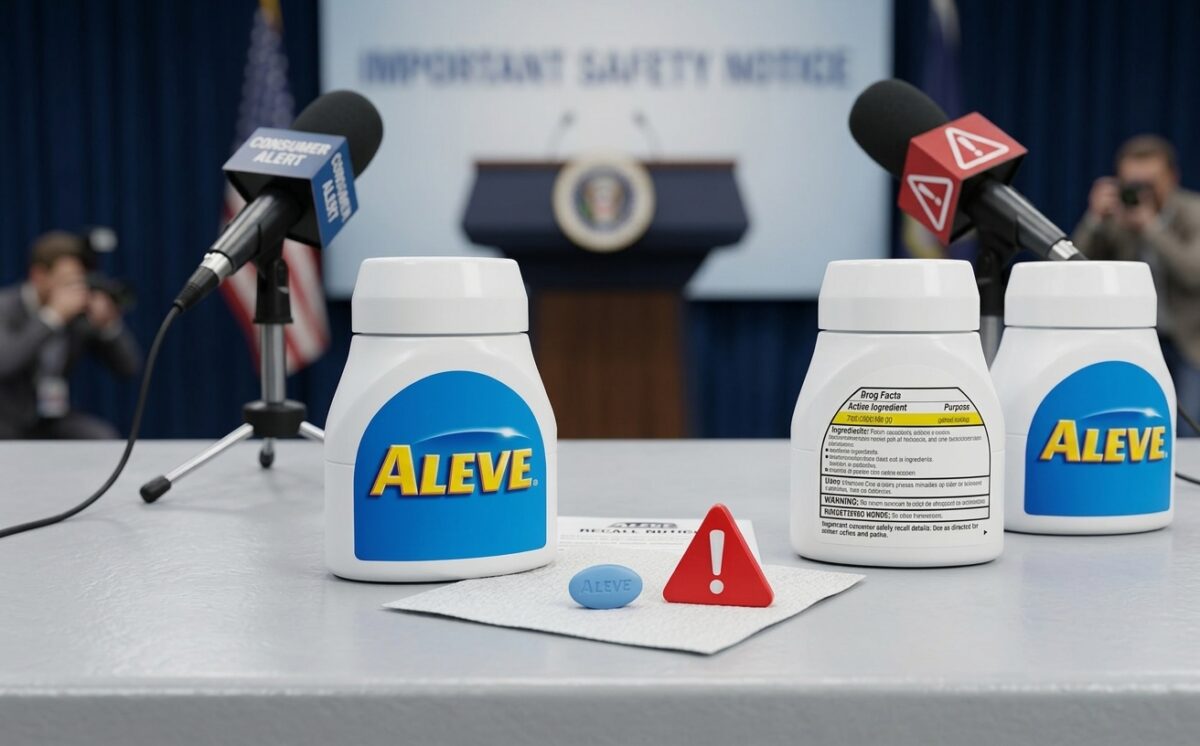
Health Canada has posted a Type III recall for Aleve caplets after customer-returned products were inadvertently placed back into saleable inventory and shipped to wholesalers. The notice, published on October 15, 2026, carries identification number RA-82781 and names Bayer Inc. as the recalling company.
Read Also
The recall is limited to the wholesale level. Health Canada’s notice does not say the product reached store shelves or individual consumers, but anyone who handles or stocks the product should check the details below.
Regulatory Response
Health Canada classified the action as a Type III recall, which is the lowest of its three recall classes. The agency lists the alert as a health product recall in the category of drugs, and the issue type is recorded as ‘Health products – Other.’ The notice is aimed at the general public, healthcare professionals and industry.
The listed depth of recall is wholesalers. The notice does not describe any injuries or adverse reactions linked to the affected lot.
Advertisement
Read Also
Recalled Products at a Glance
- Brand: Aleve
- Product: Aleve caplets (the notice title says 200 mg)
- Market authorization: DIN 02301733
- Dosage form: Caplets
- Lot number: NAAEWF2
- Recalling firm: Bayer Inc., 2920 Matheson Blvd. E, Mississauga, ON L4W 5R6
- Recall class: Type III
- Recall number: RA-82781
One detail is worth flagging. The headline of the Health Canada notice refers to Aleve 200 mg caplets, while the affected products table lists the strength as 220 mg. The notice does not explain the difference, so readers should rely on the DIN and lot number to confirm whether a product is affected.
What Went Wrong?
According to Health Canada, products that customers had returned were inadvertently reintroduced into saleable inventory. Those items were then distributed to the wholesale level.
In plain terms, this was a distribution and inventory control error rather than a reported manufacturing defect. The notice does not state that the caplets are contaminated, mislabelled or otherwise unsafe. It also does not say how many units were involved, how many wholesalers received them, or when the shipments took place. Returned medication is normally kept out of the saleable supply, which is why the agency treated the mix-up as a recall issue.
Who Should Be Concerned
The recall is described as reaching wholesalers only. That means pharmacies, retailers and distributors that bought Aleve caplets from a wholesaler may want to check their stock against the lot number in the notice.
Individual consumers are not named as directly affected, and the notice gives no list of provinces, retailers or sale dates. People who have bought Aleve caplets recently can still look at the packaging for the DIN and lot number, particularly if they have questions about the product they hold.
Steps Consumers Should Take
Health Canada lists the following actions in its notice:
- Verify whether your product is affected by checking the DIN (02301733) and lot number (NAAEWF2).
- Consult your healthcare provider before discontinuing use of the affected product, or if you have any health concerns.
- Contact the recalling firm, Bayer Inc., if you have questions about the recall.
- Report any health product side effects to Health Canada through its adverse reaction reporting process.
- Report any other health product safety complaints to Health Canada.
The advice to speak with a healthcare provider before stopping the medication matters. Aleve is an over-the-counter pain reliever, and some people use it regularly for ongoing conditions. Stopping it without guidance could leave symptoms untreated, so Health Canada points people to a doctor or pharmacist rather than telling them to simply stop.
What the Agency Said
Health Canada’s notice summarizes the issue in a single line: customer-returned products were inadvertently reintroduced into saleable inventory and distributed to the wholesale level. Its stated guidance for the public is to consult a healthcare provider prior to discontinuing use of the affected product, or for any health concerns.
The notice was last updated on October 15, 2026, the same day it was first published. Health Canada’s recall database is the place to watch for any later changes, such as added lots, expanded distribution or revised product details.
Why a Type III Label Matters
Type III is the least serious recall category, so the classification suggests the agency does not expect the situation to cause adverse health consequences. Even so, a recall at the wholesale level exists to pull the affected lot out of the supply chain before it can reach more buyers. Anyone with questions about a specific package should contact Bayer Inc. or speak with a pharmacist.
Official Source: View original notice on Health Canada →
Advertisement