Listeria Risk Prompts Recall of Family Farmstead Cheddar Cheese
 Linda H.
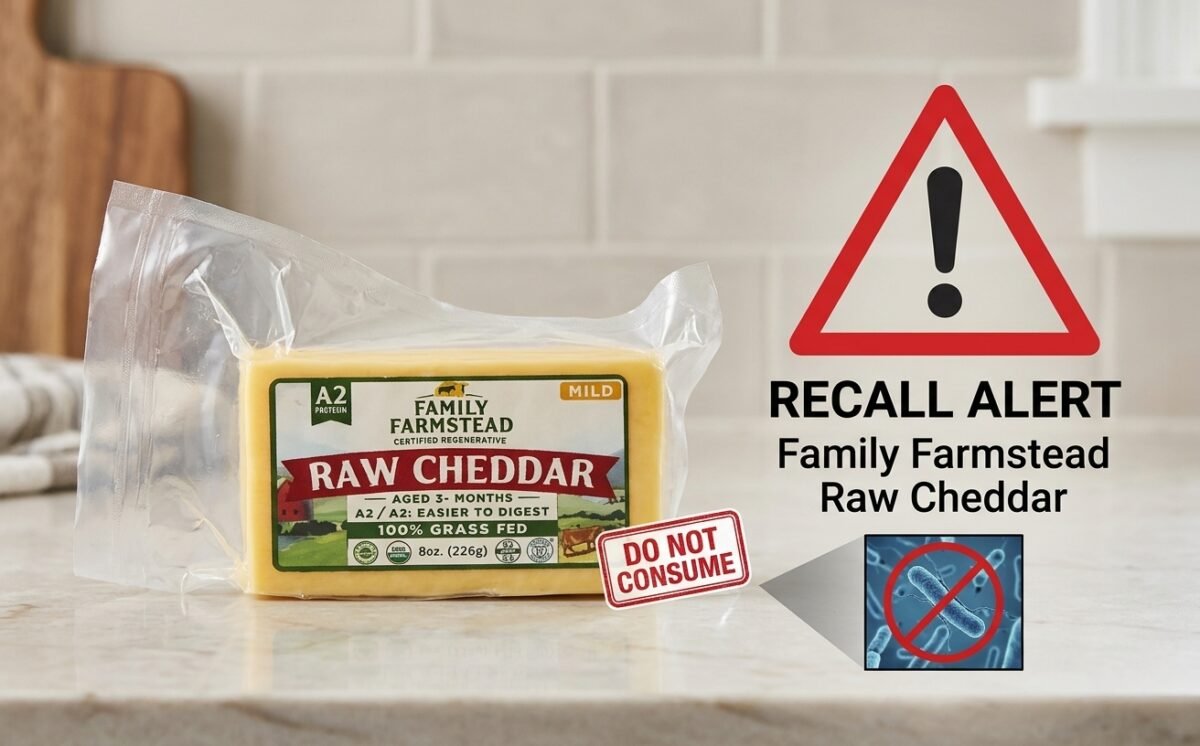
Family Farmstead Dairy, based in Worcester, New York, has pulled all of its raw mild and raw sharp cheddar from sale after concluding the cheese could carry Listeria monocytogenes. The Family Farmstead cheddar cheese recall was posted by the FDA on November 10, 2026. Anyone holding a package should not eat it and should take it back to the store or call the dairy.
Read Also
This is not the dairy’s first recall this autumn. On October 15, 2026, it recalled certain raw cheddar products over possible contamination with the E. coli strains O26:H11 and O45:H2. The latest announcement widens the action to every cheddar the company sells, and the company says it grew out of that earlier recall.
What Products Are Being Recalled?
Both items carry the Family Farmstead name and come in 8 oz packages wrapped in plastic:
- Raw Mild Cheddar
- Raw Sharp Cheddar
Identification runs on dates. Every lot code or best by date of 10/16/27 or earlier is in scope, so you cannot rely on matching a single batch number.
Advertisement
Read Also
Look for the date printed on the wrapped package. The notice does not say where on the wrapper it sits, and it lists no UPC codes.
Other products from the dairy are outside this action unless the company flags them specifically. Photos of the packaging are available on the FDA page for the announcement.
Why Was This Recall Issued?
The dairy says the cheddar may be tainted with Listeria monocytogenes, a bacterium behind infections that can turn grave. Small children, older or frail adults and people whose immune defenses are weakened face the greatest danger, and the illness can be fatal in those groups.
Healthy adults often get off lighter. The company describes a brief illness with high fever, intense headache, stiffness, nausea, belly pain and diarrhea.
Pregnant women face a separate threat, since the infection can end a pregnancy through miscarriage or stillbirth.
The dairy frames the move as part of its drive for continuous improvement and says it acted because contamination is possible.
Who Is Affected?
Shoppers who bought the cheese at retail stores in New York, New Jersey, Vermont, New Hampshire, Massachusetts, Pennsylvania, Rhode Island, Connecticut, Delaware, Virginia, West Virginia or Tennessee. That is the distribution area the company gives.
No retail chains are named. Sale dates, prices and the number of packages sold are also missing from the notice.
Pregnant women, older adults, young children and people with weakened immune systems have the most reason to take the matter seriously.
What Should You Do?
- Find any Family Farmstead raw cheddar in your fridge, freezer or pantry and read the date on the wrapper.
- If the date is 10/16/27 or earlier, do not eat it, and do not pass it to anyone else.
- Take it back to where you bought it, or contact the dairy for help.
- Phone Family Farmstead Dairy at (607) 397-4044 (M-F, 8:00-5:00) or email customerservice@familyfarmsteaddairy.com.
In general, food safety agencies advise sealing a recalled item in a bag and keeping it apart from other food until it leaves the house. Wash shelves, drawers, knives and cutting boards that touched it with hot soapy water.
If you already ate some and feel fine, there is usually no cause for alarm. Still, pay attention to how you feel over the following days.
What Is Listeria and How Does It Show Up?
In general, Listeria is a germ that can multiply even in cold storage. A chilled fridge therefore does not make a contaminated food safe, and the bacteria can spread from packaging to nearby surfaces.
Symptoms do not always start right away. They can take a while to appear after eating a contaminated food, so someone who ate the cheese and feels well may still want to stay alert for changes.
Doctors advise anyone who ate a recalled food and then develops fever, severe headache, stiffness or stomach upset to call a healthcare provider and mention the cheese. People in higher-risk groups, including pregnant women, can ask a doctor or pharmacist whether they need extra follow-up even without symptoms.
Common Questions
Is this connected to the October recall?
The company says its latest decision follows the October 15, 2026 recall of certain raw cheddar products. The notice does not say whether the two contamination concerns are related.
Has anyone been sickened?
The notice does not mention any confirmed illnesses, and it does not explain how the possible contamination came to light.
Can I get a refund?
The company says you may bring the cheese back to the place of purchase or contact it for assistance. The notice does not spell out whether that means a refund, a replacement or something else.
Can I trim the cheese or cook it instead?
The notice does not address trimming or cooking. Its instruction is to return the product, and that is the safest reading of it.
Official Statement
The FDA says it posts company recall announcements as a public service and does not endorse either the product or the company. For its part, the dairy thanks distributors, retailers and customers for cooperating, and apologizes for any inconvenience the recall causes.