Cipton Youth Bike Helmets Recalled for Head Injury Risk: CPSC
 Linda H.
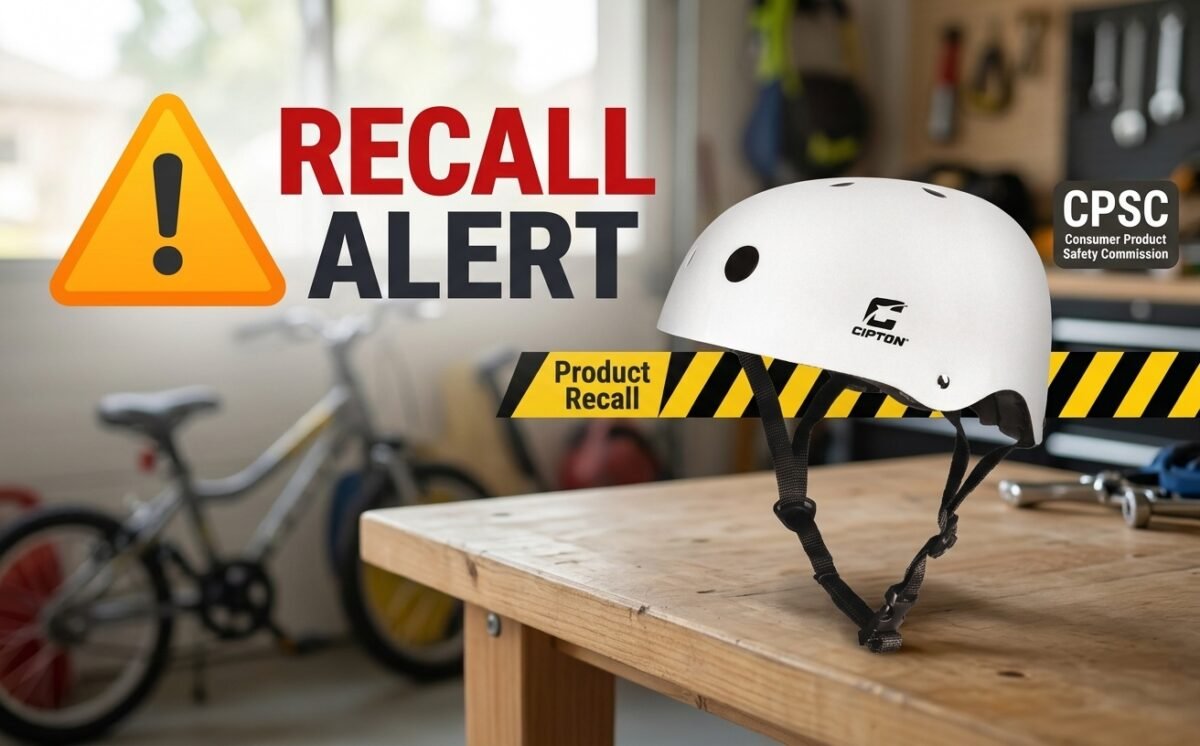
Hardline Group, which does business as Cipton, is recalling youth-size bicycle helmets that fail federal safety rules and may not protect a rider’s head in a crash, the U.S. Consumer Product Safety Commission said Thursday. Anyone with one should stop using it right away and ask the company for a full refund. The Cipton bike helmet recall carries CPSC recall number 27-098.
Read Also
Recalled Products at a Glance
The recall covers Cipton-branded bicycle helmets sold in white and in youth size small. Here is how to confirm what you have.
- Size: youth small, fitting a head circumference of about 19.7 to 21.3 inches.
- Color and parts: white helmet with black padding, black straps and a black buckle.
- Lighting: a built-in, multi-colored LED light strip.
- Model label: ‘CPSK300CC’ is printed on a label inside the helmet.
Start with the label. If it reads ‘CPSK300CC’, treat the helmet as recalled.
What Triggered the Recall
According to the CPSC notice, the helmets violate the mandatory federal safety standard for bicycle helmets. They fall short on impact attenuation and positional stability, and they do not meet the certification requirements either.
Advertisement
Read Also
The agency’s concern is simple. In a crash, these helmets can fail to protect the person wearing them, which poses a risk of serious injury or death from head injury.
What the Failed Requirements Mean
In general, impact attenuation describes how well a helmet absorbs and spreads out the force of a blow so that less of it reaches the skull. Positional stability is about whether the helmet stays where it belongs during a fall instead of shifting or coming off. Certification is the paperwork side: a maker is expected to test the product and document that it passes before selling it.
A helmet can look fine on the shelf and still fall short on any of these points.
Who Should Be Concerned
Anyone who bought a Cipton helmet between April 2024 and May 2026 should check the label. According to the notice, the helmets went on sale at Dicks Sporting Goods and JC Penny stores nationwide and online at Dickssportinggoods.com, for about $35. CPSC puts the total at 16,730 helmets.
Hardline Group, based in Brooklyn, New York, distributed them, and the notice says they were made in China.
Youth size small means the wearers are most likely children, although the notice does not name an age range. Parents, grandparents and anyone who bought one as a gift should look. Check closets, garages and bike racks too, since a helmet bought by one person is often worn by another.
What Consumers Need to Do Now
Cipton is offering a full refund. The company asks consumers to destroy the helmet and send proof. The steps, in order:
- Stop using the helmet immediately.
- Contact Cipton by phone at 888-588-1629, 9 a.m. to 5 p.m. ET Monday through Friday, by email at Reply@customersupport123.com, or online at Southerntelecom.com/recall-2026-11-19. The main site, Southerntelecom.com, also works: click ‘Recall’ at the top of the page.
- When asked, destroy the helmet by cutting the straps and writing ‘Recalled’ on it in permanent marker.
- Email a photo of the destroyed helmet to Reply@customersupport123.com.
- Dispose of the recalled helmet.
The notice also carries a warning about lithium-ion batteries. It says defective ones should not go in household trash, curbside recycling or the battery drop boxes at retail and home improvement stores, because they present a greater risk of fire. A municipal household hazardous waste collection center may accept them. Call first to confirm, and if the center declines, ask your municipality what to do. The notice does not say which part of the helmet the warning applies to.
Choosing a Replacement Helmet
In general, a helmet sold in the United States is expected to carry a label stating that it meets the federal bicycle helmet standard. Look inside the helmet for it.
Fit matters as much as the label. A helmet should sit level on the head, not tipped back, and the straps should be snug without choking. Children’s heads change size as they grow, so a helmet that fit last season may no longer sit right. Until a new helmet is in hand, the stop-use instruction means the rider should skip the ride.
Frequently Asked Questions
Has anyone been hurt, and how do I report a problem?
The notice says no incidents or injuries have been reported. To report a dangerous product or a product-related injury, use SaferProducts.gov or call the CPSC hotline at 800-638-2772 (TTY 800-638-8270).
Are the LED lights the problem?
The notice does not link the lights to the hazard. CPSC ties the recall to the helmets failing the requirements of the bicycle helmet standard.
Can I sell or give away the helmet instead of destroying it?
No. CPSC says federal law prohibits anyone from selling a product covered by a voluntary recall undertaken with the agency. The notice tells consumers to destroy the helmet and dispose of it.
Do I need a receipt, and how long will the refund take?
The notice does not specify whether proof of purchase is required, how the refund is paid or how long it takes. Ask Cipton when you call or email.